
GAIAS EUROPA
The Liberal Arts Educational Model
OUR MODEL
The Liberal Arts Educational Model
During the 19th and 20th centuries, the Liberal Arts model became firmly established in prestigious U.S. universities such as Harvard, Yale, and Princeton. This model promotes an education centered on critical thinking, creativity, and the integration of multiple disciplines.
Today, this model is adopted by elite universities worldwide, combining sciences, humanities, and professional training to prepare students for an ever-changing world.


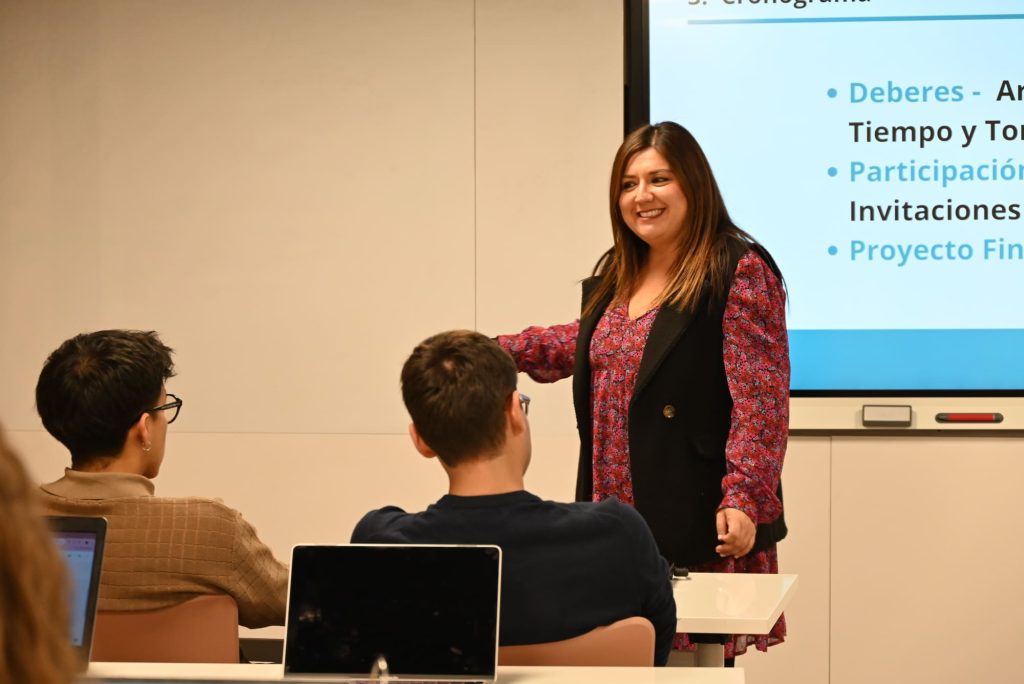
Modelo educativo de Artes Liberales
In Latin America, Universidad San Francisco de Quito (USFQ) has been a pioneer in implementing this educational philosophy. Inspired by the world’s leading universities, USFQ offers an approach that fosters interdisciplinarity, experiential learning, and the development of global citizens equipped with innovation and leadership skills.
Through our General College Curriculum, students have the opportunity to explore diverse fields of knowledge before specializing, ensuring a well-rounded education adaptable to modern challenges.
With over 2,000 years of history, the Liberal Arts model remains one of the most effective ways to prepare students for a world where creativity, adaptability, and complex problem-solving are essential for professional and personal success.
Core Principles of Liberal Arts
Multidisciplinarity and Flexibility:
Students explore multiple fields, combining science, humanities, arts, and technology.
This allows them to discover new passions and develop a holistic worldview.
Critical and Creative Thinking:
Through debate, textual analysis, and interactive problem-solving, the model fosters the ability to question, research, and propose innovative solutions.
Ethics and Social Responsibility:
Liberal Arts programs emphasize the formation of ethical global citizens, prepared to lead and face social, environmental, and cultural challenges.
Experiential Learning:
Moving beyond theory, we promote “learning by doing” through research projects, international exchanges, internships, and community service.
Communication and Expression Skills:
Students strengthen their ability to communicate effectively through writing, public speaking, and digital media, providing a competitive edge in any professional field.
Benefits of the Liberal Arts Model
Adaptability:
Graduates can excel in multiple industries, as their training prepares them for diverse and evolving work environments.
Independent Thinking:
Education goes beyond memorization; it focuses on learning how to reason, analyze, and challenge the status quo.
Global Perspective:
Exposure to various disciplines and cultures promotes an open-minded and global vision of the world.
Enhanced Employability:
The combination of technical skills and "soft skills" (interpersonal competencies) increases job opportunities across multiple sectors.
Application in Higher Education
We don’t just train professionals; we shape critical, ethical citizens committed to transforming the world.
The Liberal Arts model is especially valued where innovation and complex problem-solving are essential.
Institutions following this approach prepare students to be leaders, entrepreneurs, and versatile professionals capable of excelling in any discipline.